A Designer's Take on the Mom Leopard Sunflower Faux Embroidery
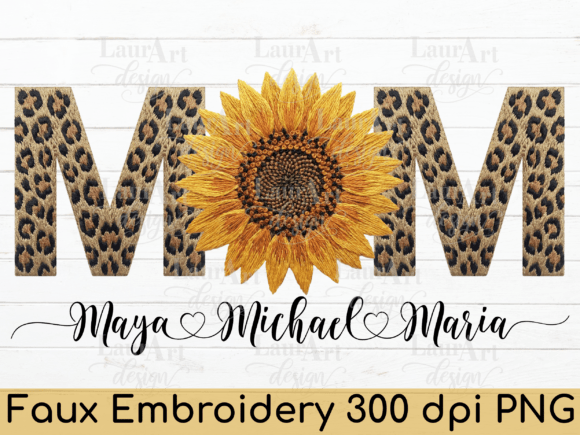
Let’s talk about a design that’s landed in my workshop, and I’m looking at it through the lens of a weekend craft fair. This isn't just about aesthetics; it's about what will catch a customer’s eye from three feet away, what feels good in their hands, and what I can realistically produce for a table full of products. Today’s subject is the MOM Leopard Sunflower Faux Embroidery. It’s a digital file, a freebie graphic, and my job is to figure out its potential as a real-world, sellable craft fair product.
First Impression: Bold, Warm, and Unexpectedly Chic
The name alone tells a story. "Mom" gives it a heartfelt, personal anchor. "Leopard" introduces a touch of bold, trendy pattern. "Sunflower" brings in that classic, warm, rustic charm. Combined, this isn't a minimal or overly soft design. It feels boldly decorative, with a premium, handmade quality implied by its complexity. It’s not strictly farmhouse; the leopard element modernizes it. It’s not purely rustic; the mix feels intentional and chic. For a craft fair booth, this means it could stand out as a conversation piece—something that makes a customer pause and say, "Oh, that’s clever and beautiful."
Where This Design Shines on Physical Products
Imagining my table display—tote bags, aprons, tea towels, caps, pouches, pillow covers—I immediately start visualizing placements.
- Tote Bags & Market Bags: As a large focal point on the front panel, MOM Leopard Sunflower Faux Embroidery would be stunning. The scale allows all details to shine, making a statement bag that feels both personalized and artistic. It elevates a simple canvas tote.
- Aprons & Kitchen Towels: Placed on a pocket or the bib of an apron, it becomes a delightful accent. On a tea towel, centered near the top, it turns a utilitarian item into a decorative kitchen gift. The design’s warmth fits the kitchen environment perfectly.
- Embroidered Patches: This is a strong contender. As a standalone patch, it offers immense versatility. Customers could apply it to their own items, making it a fantastic lower-cost option that still showcases the design’s full artistry.
- Pillow Covers: For a more home-decor focus, a large version on a pillow cover would be gorgeous. It leans into that decorative, premium feel, appealing to buyers looking for unique accent pieces.
- Caps & Small Pouches: Here, caution comes into play. The curved surface of a cap and the smaller area of a pouch might force a significant reduction in size. We must consider if the intricate leopard and sunflower details, and potentially any small lettering, would lose clarity when scaled down.
The Practicalities of Production and Sale
As an embroidery designer preparing for batch production, several key points need evaluation.
Understanding at a Glance
This design communicates quickly. The "MOM" text is central, appealing to a huge demographic. The floral and pattern elements support it visually. At a craft fair, where customers scan quickly, this combination works. It’s not ambiguous; it’s a gift-ready, sentiment-driven motif.
Photographing for Online Listings
For my Etsy shop or online mockups, the contrast and detail level in the MOM Leopard Sunflower Faux Embroidery file will be crucial. A design with good contrast between elements photographs well, making online listings pop. This one, with its likely mix of textures, should have strong visual interest in a product photo, especially on a textured fabric like a linen towel or a cotton tote.
Batch Production & Repeatability
Is this a design I can run ten times in a row for a batch of tote bags? That depends on the stitch density and estimated runtime. Dense stitch areas can be time-consuming and require careful hoop size and stabilizer selection. Without knowing the exact file specifications, I would advise testing on scrap fabric first to gauge time and thread usage, which directly impacts my cost and pricing for the finished product.
Fabric and Color Considerations
The design likely has a lot of visual texture. On a dark fabric, thread color contrast is paramount—will the details still be vibrant? On a textured towel, will the stitches sit cleanly? Testing on various swatches—light, dark, smooth, textured—is a non-negotiable step before committing to a product line.
Critical Designer Notes Before the Fair
Before I stitch this onto anything destined for my booth, here’s my real-world checklist:
- Create a Real Mockup: Never rely solely on the digital preview. Stitch the machine embroidery design out on a scrap of the actual fabric I intend to use (e.g., canvas for bags, linen for towels). This reveals true thread coverage, any registration issues, and the physical appeal.
- Check Thread Contrast and Color Palette: Does the implied color palette from the graphic work with my thread inventory? Do the leopard spots stand out clearly from the sunflower petals? Adjust if necessary.
- Review Scaling for Different Products: Test a small version for caps or pouches. Do tiny details vanish? If so, limit the design to larger-scale applications.
- Confirm Licensing for Commercial Use: The product description includes a kind reminder: watermark the design on physical products and no digital resale. For my craft fair products, this means I must ensure I understand and adhere to these terms for my commercial embroidery use. It’s a freebie graphic, but respecting the creator’s terms is essential.
- Assemble a Cohesive Booth Display: How does a tote bag with this design look next to my other items? Does it complement my brand’s style? A standout piece like this can act as a booth anchor, drawing attention to the entire table.
Final Judgment: A High-Potential Anchor Piece
The MOM Leopard Sunflower Faux Embroidery strikes me as a high-potential design for a handmade market. Its emotional resonance ("Mom"), its visual interest (leopard + sunflower), and its decorative complexity suggest it can add perceived value to a simple product. It’s best suited as a larger focal point on items like tote bags, pillow covers, or aprons where its details won’t be compromised. For small shops and Etsy sellers, it offers a route to a unique product that feels both trendy and timeless.
Its success, however, hinges entirely on the practical groundwork: testing the actual embroidery file on real fabrics, managing production time for batch orders, and presenting it in a way that highlights its handmade quality. Done right, it could be that one item at the craft fair that people remember and talk about—the perfect blend of sentiment, style, and skilled craft.